How I Turned Around a Failing Organisation
When I joined the executive team at LUCS as Strategy & Operations Executive, the society was operationally defunct — no funding, no product-market fit, declining membership, and no clear value proposition for students. By the time I finished, we had 333 members, 15 events, partnerships with six firms including BCG and Accenture, and a 1500% increase in funding.
The Problem
Leeds University Consulting Society had been mismanaged for years. There was no operational structure, no funding pipeline, and no reason for students to join. Competitive pressures from other societies meant LUCS was losing relevance fast. The previous committee had left the society in a position where it was not delivering any tangible value to its members.
The core offering was unclear. Events were infrequent and poorly attended. There were no firm partnerships, no workshops, and no pathway for members to develop real consulting skills. In short, the society existed in name only.
The Strategy
1. Research & Product-Market Fit
Before changing anything, I conducted research with potential members and “customers” — students who had either left the society or never joined. The findings were clear: students wanted hands-on skill development, not just networking events. They wanted to practice case interviews, work on real problems, and interact with actual consultants.
This research directly shaped our new product offering. I redesigned the society’s value proposition around practical consulting skill-building: case workshops, profitability exercises, and structured programmes that gave members something they could not get elsewhere.
2. Building the Team
You cannot scale with a skeleton crew. I recruited and built out dedicated teams for operations, marketing, and outreach. Each team had clear ownership of their function, defined deliverables, and accountability. The committee grew to 15 people, each with a specific role — Operations Associates, Marketing Associates, UG and PG Reps, and a Social Secretary.
3. Forging Firm Partnerships
This was the hardest part. Consulting firms — especially Accenture — were reluctant to work with student societies. Their concern was reliability: student organisations over-promise and under-deliver. I made it personal. I told Accenture that I would personally ensure they had a smooth experience, and I followed through.
Over the year, we built partnerships with BCG, Jane Street, Accenture, PwC, Whitecap Consulting, and Agile HR Consulting. Each partnership was bespoke — some delivered talks, some judged competitions, some co-hosted workshops. The result was a programme that gave students direct access to professionals they would otherwise never meet.
4. The Flagship Product: Case Study Competition
The centrepiece of the turnaround was LUCS’s first-ever Annual Case Study Competition, sponsored by Whitecap Consulting. Over 70 students entered. The competition ran over two weeks with two rounds: a profitability case under time pressure in Round 1, followed by a go-to-market strategy challenge for a mortgage fintech firm in Round 2, judged by Whitecap’s consultants.
I designed the first round, which tested analytical skills, teamwork, communication, and time management. This single event did more for LUCS’s credibility and membership pipeline than anything else — it proved that we could deliver serious, high-quality programming at scale.
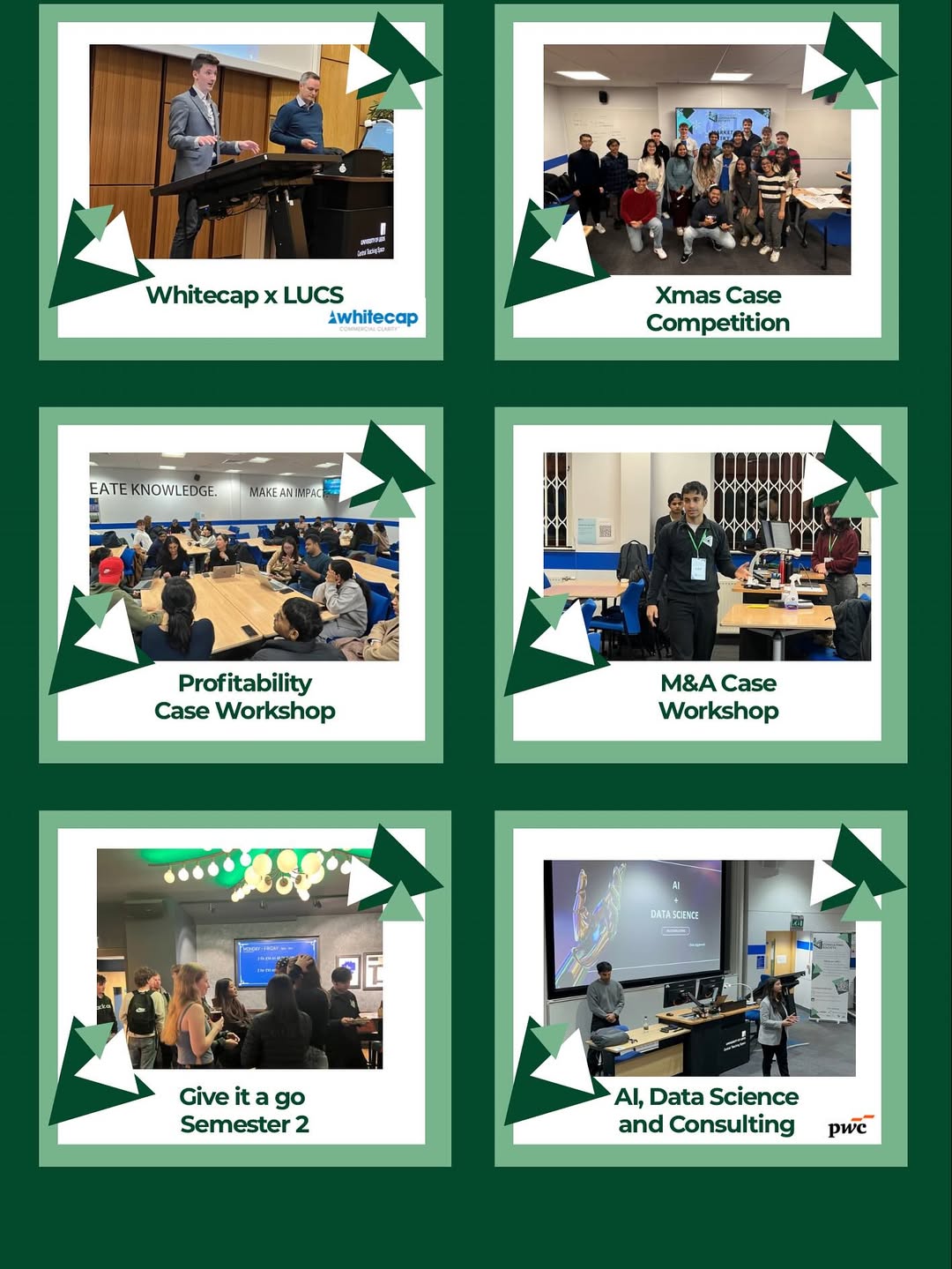
Inaugural Annual Case Study Competition — sponsored by Whitecap Consulting, 70+ entrants
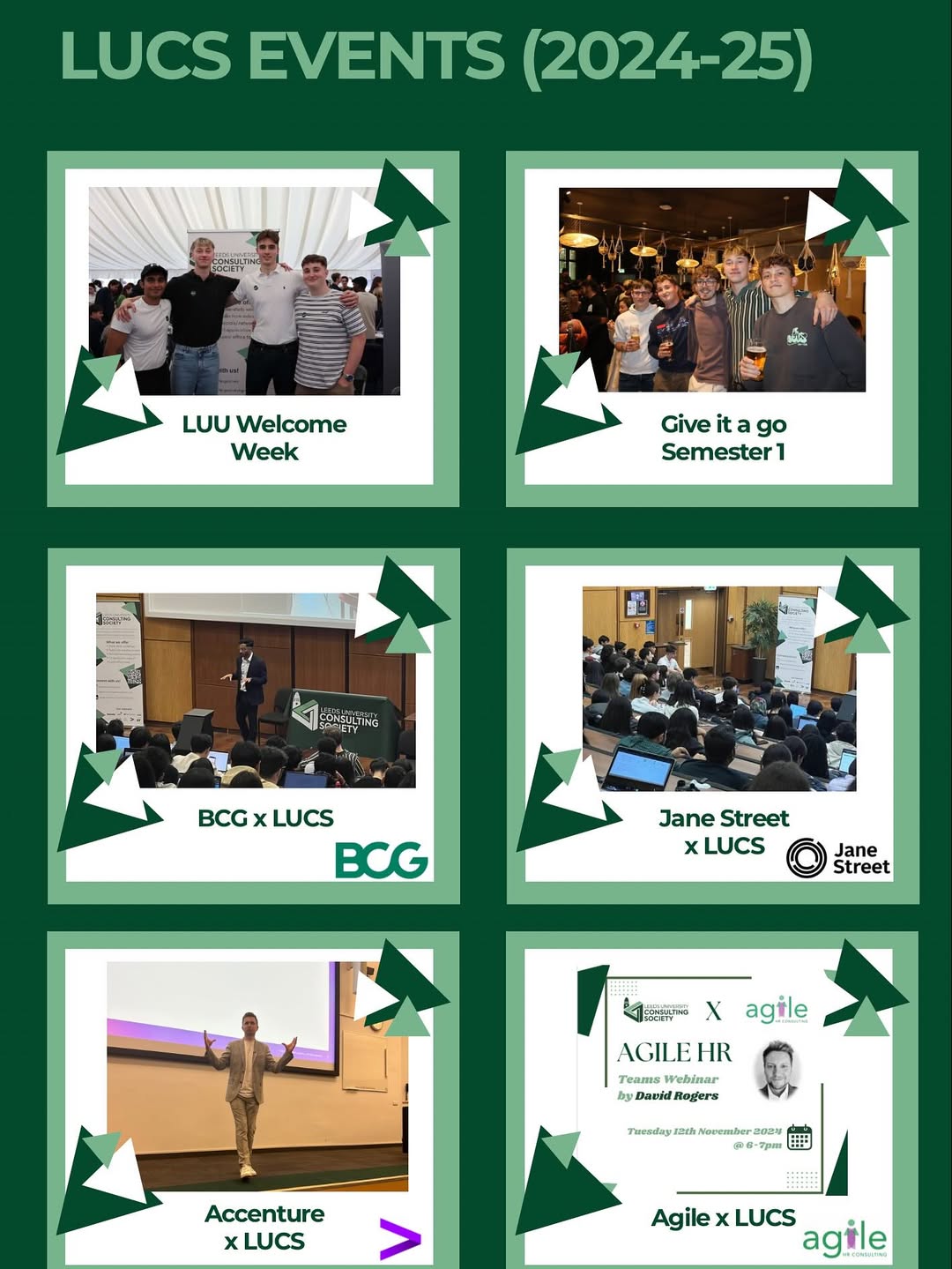
15 events delivered across the 2024–25 academic year including workshops, talks, and competitions
Partnerships Secured
Each partnership was tailored to deliver maximum value to members. BCG and Jane Street delivered industry talks. Whitecap sponsored and judged the case competition. Accenture co-hosted a workshop. PwC presented on AI, Data Science, and Consulting. Agile HR ran a webinar on contemporary HR consulting practice.
The Results
By year end, the transformation was measurable across every dimension: 333 members (up from near-zero active engagement), a 200% increase in event attendance, 15 events delivered, a 1500% increase in funding, +700 Instagram followers, and +400 LinkedIn followers.
We also co-hosted the LUCS x ECON x LUBS Ball, strengthening cross-society relationships and cementing LUCS as a serious player in the Leeds Business School ecosystem. Strong membership revenue and new sponsorship contributions enabled us to invest in better resources and higher-quality events.
The society successfully transitioned to a new executive team — Areeba Shahid as President, Adhiraj Kumar as Secretary, and Joseph Hopkins as Treasurer — with the operational systems, partnerships, and brand equity to sustain the momentum.
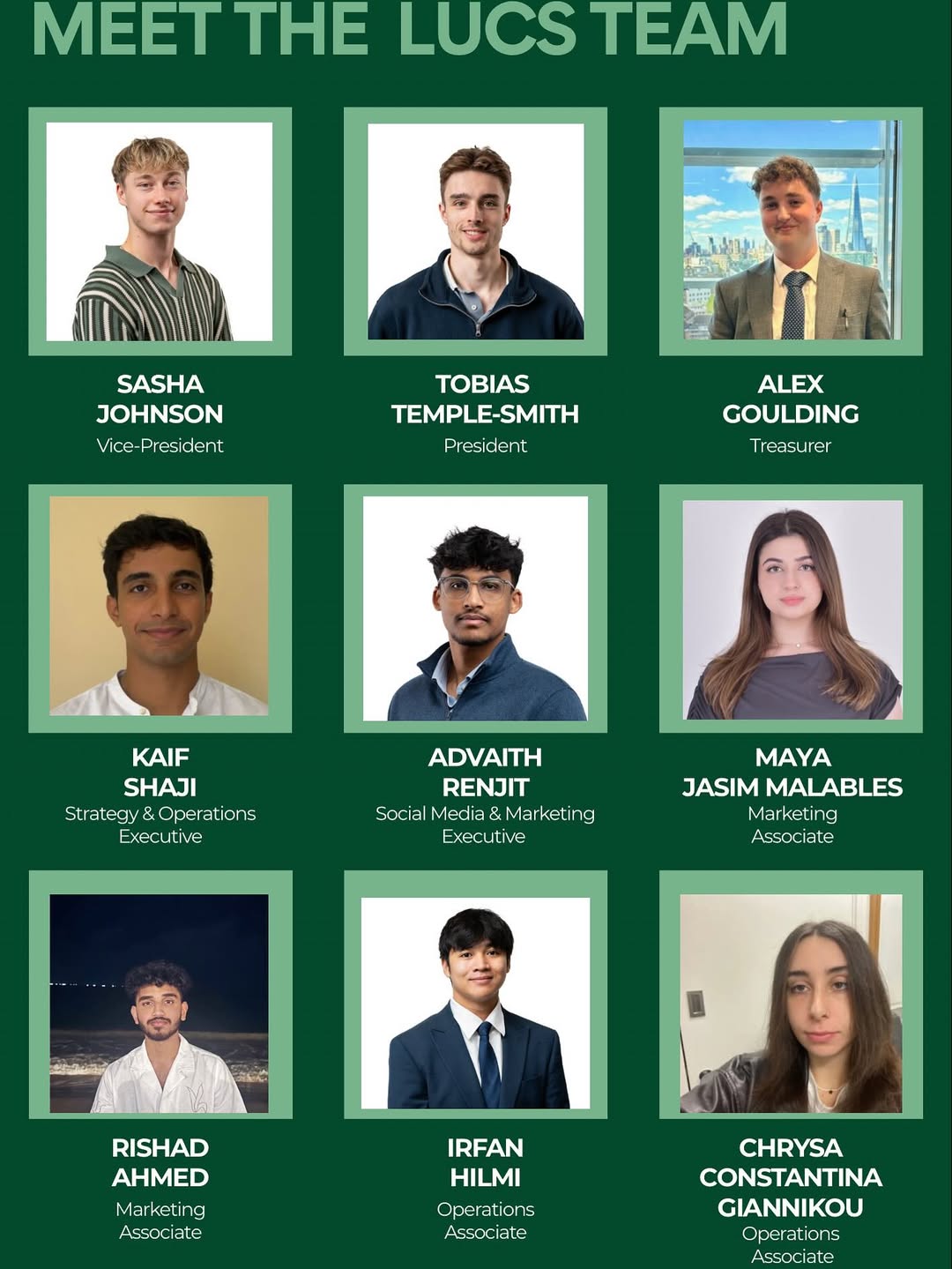
Key achievements from the 2024–25 Annual Report
The 2024–25 executive team — Toby, Alex, Sasha & Kaif
This experience taught me that turnarounds start with understanding what people actually need, building the right team, and then relentlessly executing. The same principles apply whether you are rebuilding a student society or restructuring a portfolio company.
© 2025 Kaif Shaji. All rights reserved.